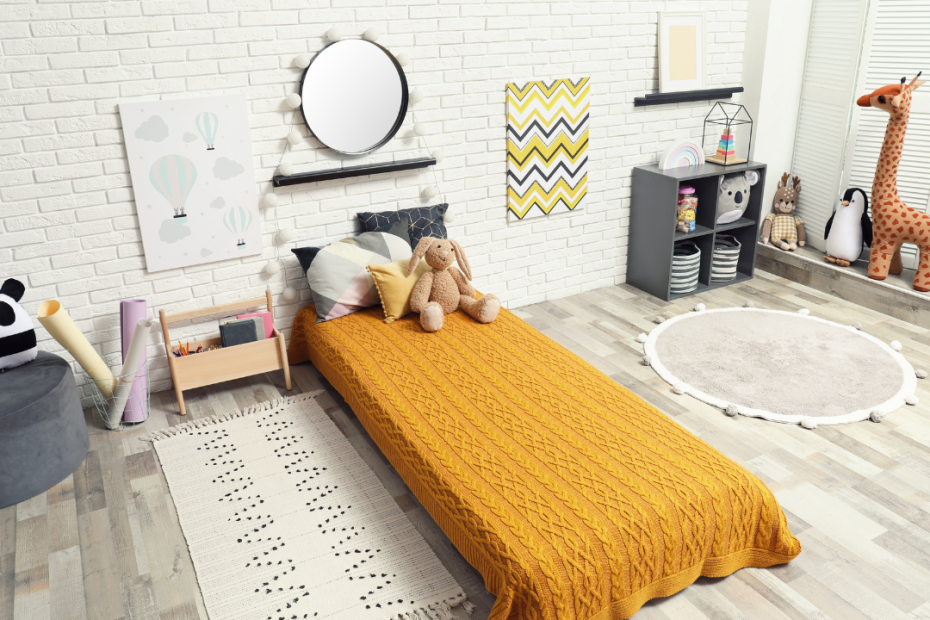
For many parents, the idea of a floor bed feels new or even a little strange. We’re used to the classic image of babies sleeping in a cot with bars, kept safely contained until they’re ready for a ‘bigger bed’. But around the world, floor beds have been used for generations and they can offer wonderful benefits when set up safely.
If you’re wondering what exactly a floor bed is, whether it’s safe, and whether it might work for your family, this guide walks you through everything you need to know.

What Is a Floor Bed?
A floor bed is simply a low sleeping surface that a baby or toddler can access independently. It may be:
- A mattress directly on the floor (with adequate ventilation), or
- A low bed frame designed to sit close to the ground
Floor beds are often associated with the Montessori method, which encourages independence, freedom of movement and respect for a child’s natural development. With a floor bed, little ones can get in and out of their sleep space by themselves, explore safely and enjoy a more open environment.
Floor beds can be used by the baby or child alone, for bedsharing with a parent or even as a sleep space for the whole family.

When Might a Floor Bed Be Useful?
A floor bed can be a helpful option in a variety of situations, including:
- When bedsharing but worried about safety
If your child tends to roll or the height of your current bed feels unsafe, a floor bed reduces fall risks.
- When transferring into a cot is difficult
For some babies, no matter what you do, they always wake up on transfer from arms to cot. A floor bed allows you to cuddle and lie with them and then roll away without waking them. It can often mean a lot more sleep for your family.
Parents with back pain, mobility issues, pregnancy discomfort or caesarean recovery often find a low bed easier to manage than having to physically lift a child in and out of a cot.
- If you nurse your child to sleep
A floor bed allows you to lie beside your baby, feed to sleep and gently roll away once they’re settled. You avoid that tricky transfer of moving your child and trying to lower them into a cot without them waking.
- When you’re working towards independent sleep
You can remain close, lying next to them while offering patting, singing or cuddles, then gradually reduce support as they gain confidence. Many little ones who are used to bedsharing and co-sleeping will transition to sleeping on a floor bed much easier than into a cot.
- When moving away from contact naps
Again, it’s so much easier to transfer a sleeping baby to a low mattress and stay near them as they adapt.
- You simply prefer it
Some families resonate strongly with Montessori-style environments and want a more open, child-led sleep space.

When Should You Use a Floor Bed?
There is no age at which a floor bed is suitable from. Some families use floor beds from birth (with safe setup), while others switch when they are ready to move on from co-sleeping or bedsharing.
When a Floor Bed May NOT Be Appropriate
A floor bed isn’t suitable for every household. Consider avoiding or delaying one if:
- You cannot fully baby-proof the room.
The entire room becomes the “sleep environment,” so safety must be extremely high. - You have pets that may climb onto the bed.
Babies and pets should not co-sleep. - Your home is very cold, damp or prone to mould.
Sleeping close to the floor can make little ones colder and mattresses need airflow. - Physical limitations make it hard for you to get up and down.
This may be particularly relevant during pregnancy or postpartum recovery. - There’s a dust mite allergy (ground-level sleeping may worsen symptoms).
If any of these apply, a more traditional sleep setup may be safer or more suitable for now.
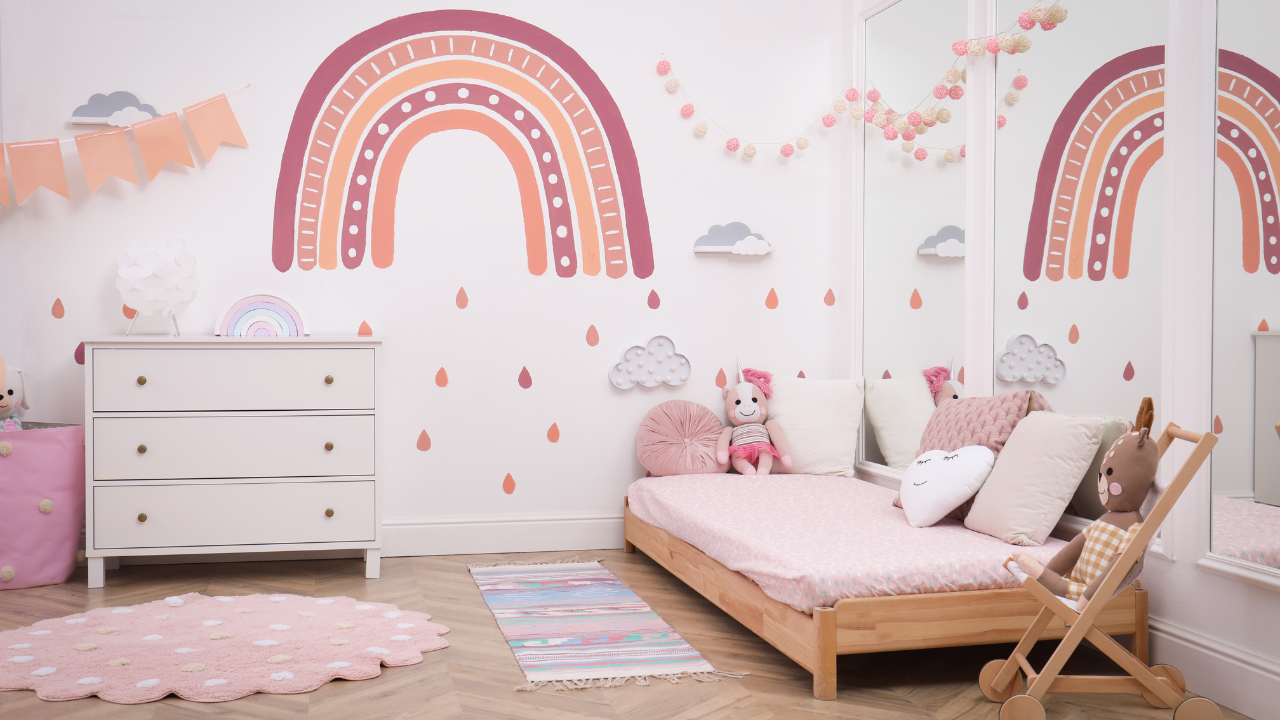
How to Use a Floor Bed Safely
Safety must come first. When using a floor bed, you’re essentially turning the entire room into a safe sleep zone.
Consider this your essential checklist:
Room Safety
- Secure all furniture to the wall to prevent tipping.
- Remove or secure heavy, tall or unstable items.
- Keep small objects out of reach to avoid choking hazards.
- Ensure windows are locked; remove cords, ties, and blind strings.
- Cover or protect radiators.
- Consider a gate on the bedroom door to keep exploration contained.
The room doesn’t have to be completely bare but just made sure it is completely safe.
Floor Bed Safety
- Avoid adult bedding, pillows, duvets or soft toys for babies under 12 months.
- Use a firm mattress ideally single size or larger so that you have the option to bedshare if needed.
- Ensure the mattress fits tightly in any frame to avoid gaps.
- Ideally place the mattress in the centre of the room to prevent entrapment between the mattress and the wall.
- If bedsharing on the floorbed, follow The Lullaby Trust safer sleep guidance for co-sleeping.
- Using a footless sleeping bag will ensure they don’t trip if they do get up.
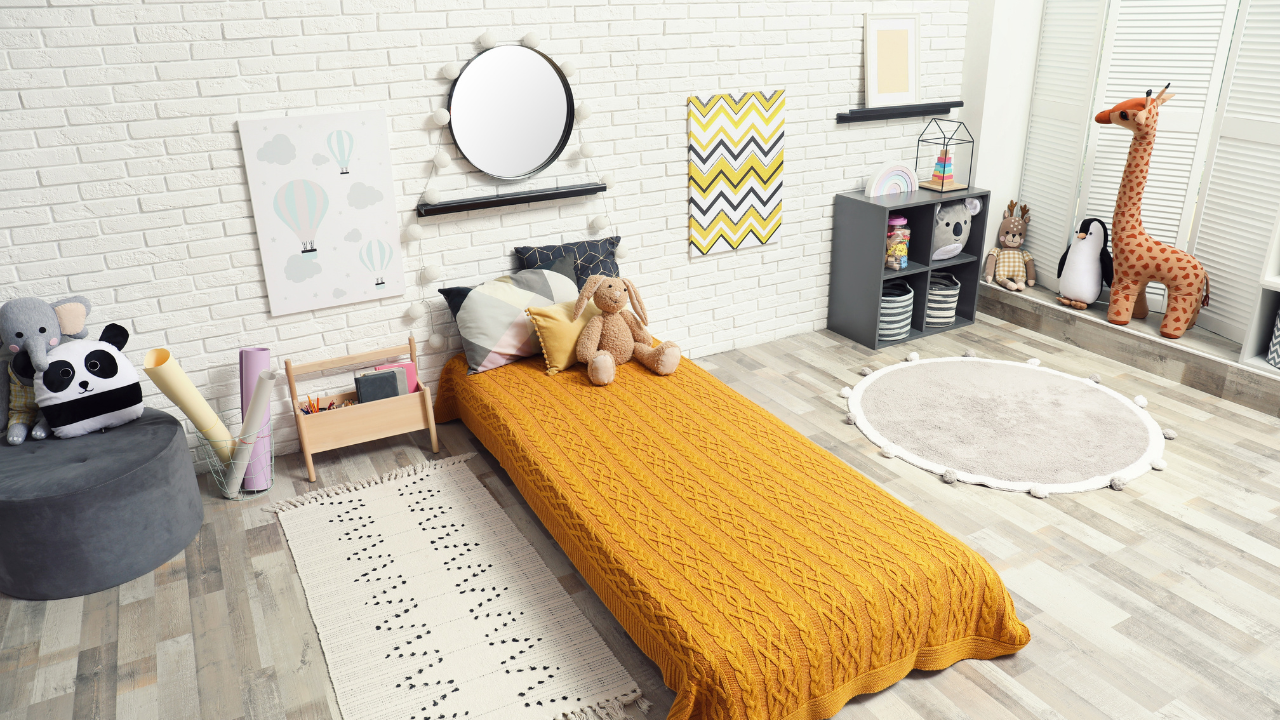
Transitioning to a Floor Bed
If you decide a floor bed might suit your family, here’s a gentle way to transition:
- Start with Familiarity
Let your baby or toddler play on the floor bed during the day. Make it part of reading, snuggling, or relaxing routines during the day. Creating some positive associations will help the transition.
- Introduce for Naps First
Once they’re comfortable, try one nap on the floor bed. Keep expectations low in the early days.
- Stay Close at First
Lay beside them to help them feel safe. Use your existing sleep associations such as patting, singing, breastfeeding, then gradually reduce your presence.
- Keep Boundaries Kind and Consistent
If your toddler gets up repeatedly, calmly return them with reassurance. This phase is normal.
- Monitor and Adjust
Some children take to floor beds immediately; others benefit from slower transitions. Follow your child’s temperament and pace.

What if they keep getting out of bed?
It’s completely understandable to worry that using a floor bed means your toddler will suddenly have endless freedom at night but in reality, most little ones don’t spend their nights getting out of their bed and trying to escape their room.
If your child is getting up repeatedly, it’s usually a sign that something deeper is going on rather than a discipline issue. Toddlers seek closeness when they feel uncertain, overstimulated or are navigating big developmental leaps and a floor bed simply makes that need more visible.
Instead of viewing the getting-up as “misbehaving,” think of it as communication. This gives you an opportunity to ask: Do they need more support settling? Are they unsure about their new sleep space? Is their routine aligned with their biological sleep needs?
When you take a curious, connection-first approach, you can identify what’s driving the behaviour and address it gently, while still maintaining consistent, age-appropriate boundaries that help them feel safe staying in their sleep space.
Practical Tips for Toddlers Who Keep Getting Out of Bed
- Provide a comfort object: A favourite blanket, soft toy, or “lovey” if your child is over 12 months can help your toddler feel secure staying in their bed.
- Check daytime needs: Ensure your toddler has enough awake time, isn’t overtired, and has had a nutritious dinner or bedtime snack to reduce hunger-related wake-ups.
- Keep the room dark and remove distractions: Use black out curtains to ensure the room is dark so they will be less tempted to see something in the room and get up to explore.
- Use a gate on the door: Using a gate on the bedroom door with ensure that they are enclosed and completely safe if they do get up in the night.
So… Are Floor Beds a Good Idea?
As a holistic sleep coach, floor beds are something I often recommend to families either as a permanent bed or as a transition stage. I find they can be a really helpful solution in the following situations:
- transitioning from bedsharing
- reducing transfer difficulties
- supporting responsive, hands-on settling
- working with sensitive or high-needs babies
- accommodating parents with limited mobility or back pain
As long as safety is your priority, a floor bed can support sleep, connection and independence. They can mean a lot more sleep for your family.
Babies and toddlers develop quickly, so continue to check your setup as they become more mobile and curious. A safe environment paired with responsive, consistent support is what matters most.
If you’re unsure whether a floor bed is right for your family, or you want personalised help getting sleep on track, I’m here to support you. Please book a free sleep assessment call to discuss your situation.


